


Persons with Disabilities Day & Disability Inclusion
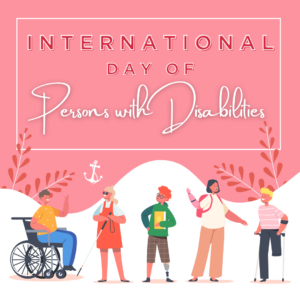
The importance of Disability Inclusion
December 3 is the International Day of Persons with Disabilities, a day to recognize the rights, dignity, and contributions of those who are differently-abled. The Junior League of Annapolis, Inc. (JLA) supports inclusion, accessibility, and equality for all. Together, we can create a world that empowers everyone. The Diversity Equity Inclusion and Belonging (DEIB) Committee of JLA put together this blog to highlight the importance of disability inclusion in our league and our community. We’ve included some resources that you might find helpful if you have time for a deeper dive.
When we think of disability we sometimes jump to those disabilities that are visible – people in a wheelchair, with hearing aids or with service animals. We may overlook those invisible conditions that may encompass mental health, neurodiversity, colostomy bags, AIDS to name a few. A better way to think of disability is that it encompasses a broad spectrum of physical, cognitive, sensory, and psychological conditions that interact with societal barriers to restrict participation in everyday life. Women with disabilities often face compounded challenges, including higher rates of poverty and unemployment, as well as barriers to healthcare and education. A more inclusive definition highlights not just medical aspects but also social and environmental factors that impact a person’s ability to thrive.
Disability Inclusion
True inclusion means creating environments where people who are differently-abled feel valued and can contribute fully. In workplaces, this involves offering accommodations like flexible schedules, assistive technologies, and accessible facilities. Many of those accommodations cross over into our league and our committee meetings. How accessible are our events and meetings? Do we ask if members and the wider community need anything to enable their full participation? Building a culture of inclusion also requires training our members to recognize unconscious bias, prioritizing diverse recruitment to our league and a broader understanding of what being differently-abled means. These efforts will enhance our league by bringing diverse perspectives to the table and create a true sense of belonging.
Accenture recently produced a framework they call the “A List” to be more intentional about disability inclusion. The A List has five parts: broaden Access, raise Awareness, foster Advocacy, integrate Action & ensure Accountability. What are the ways you might be able to incorporate the A list into JLA and your communities?
What to Read
- “Disability Visibility: First-Person Stories from the Twenty-First Century” by Alice Wong: A compelling anthology of essays that explore the nuanced experiences of disabled individuals.
- “The Pretty One” by Keah Brown: A memoir by a woman with cerebral palsy, blending humor and insight into her life.
- The Accenture Report on the disability inclusion imperative. Link here.
What to Watch
- Crip Camp: A Disability Revolution: This Oscar-nominated documentary chronicles the disability rights movement.
- Rising Phoenix: A powerful film about Paralympians and the transformative impact of sport.
Did you know?
- Women with disabilities are twice as likely to experience domestic violence than those without disabilities.
- Globally, one in five women lives with some form of disability.
Approximately 10% of Anne Arundel County residents report living with a disability, reflecting the need for accessible services and inclusion efforts. Local programs focus on reducing barriers to employment and providing resources for independent living.
Anne Arundel County provides robust support for individuals with disabilities through programs like the Aging and Disability Services Division, which offers assessments to help individuals live independently. The county has a Commission on Disability Issues, which advocates for enhanced quality of life and coordinates resources to address community needs. Additionally, the county promotes initiatives such as the “Artists Without Limits” program, showcasing the creative talents of differently-abled individuals.
December also brings us World AIDS Day on December 01. HIV/AIDS does not discriminate. It affects people from all walks of life, regardless of their race, ethnicity, gender, sexual orientation, or socioeconomic status. In 2023, 31,956 people in Maryland reported living with HIV with approximately 1500 of those in Anne Arundel. The county is now 5th in terms of new cases being reported. By promoting understanding and empathy, we can challenge the stigma and discrimination associated with HIV/AIDS. Breaking down stigma will encourage people to get tested, seek treatment, and live without fear. Consider what you might do to build strong and inclusive communities that provide a safe space for people living with HIV to connect with others, share their experiences, and access essential support services.
This International Day of People with Disabilities and World AIDS Day, join us to amplify the voices of women with disabilities and work toward a society where everyone can thrive.