


Celebrating Native American Heritage Month: Honoring the Power of Indigenous Women
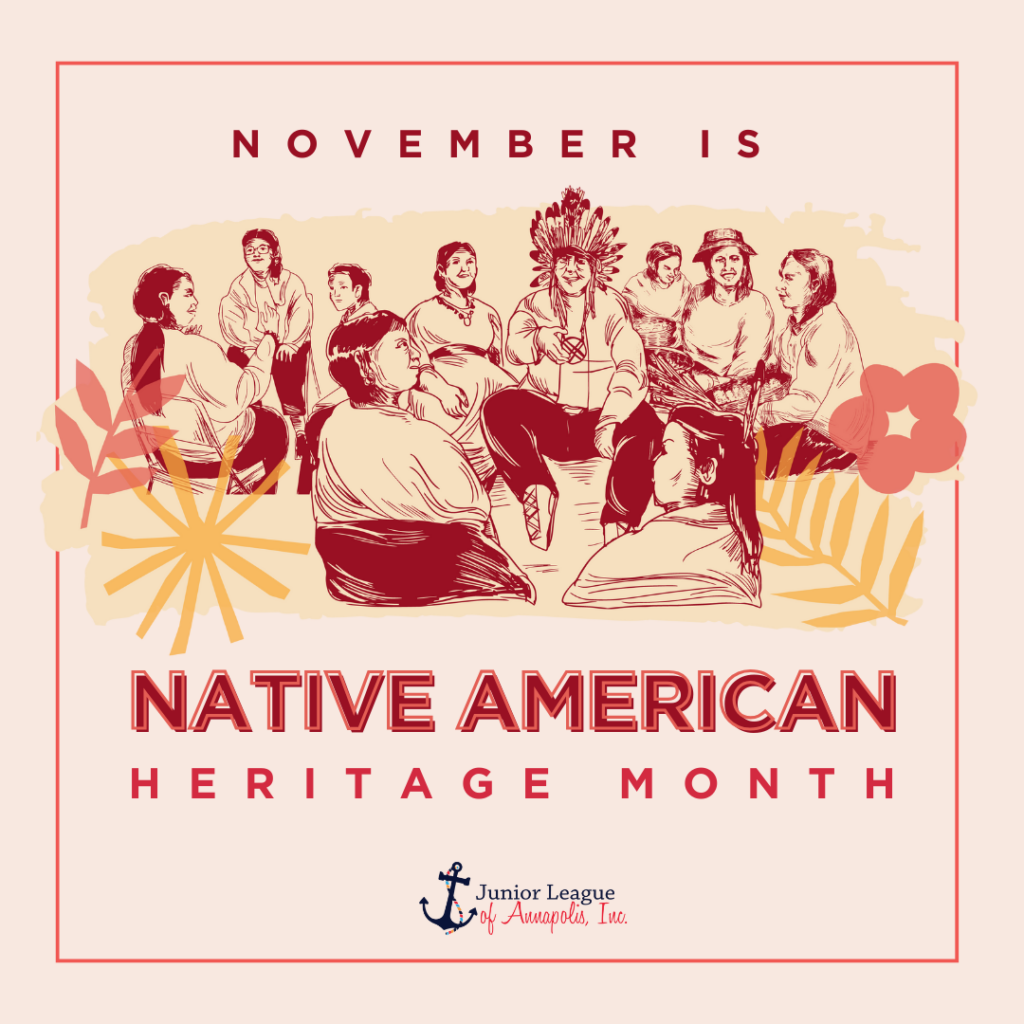
November marks Native American Heritage Month, a time to celebrate the rich history, diverse cultures, and lasting contributions of Indigenous peoples in the United States. The Diversity, Equity, Inclusion & Belonging (DEIB) committee of Junior League of Annapolis (JLA) wanted to spotlight Native American women, whose leadership, resilience, and creativity have shaped their communities and the broader world. From warriors and leaders to artists and activists, Native women have played crucial roles in sustaining their cultures and advocating for their people’s rights, even in the face of adversity.
Native American Heritage Month was first declared in 1990 when President George H. W. Bush approved a joint resolution designating November as the official time to celebrate Native American heritage. However, its origins date back much earlier, when various advocacy groups and activists pushed for recognition of Native American history and rights. The month serves as a reminder of the diverse contributions of Native American peoples to the fabric of the United States and as a platform for ongoing education and awareness about Indigenous histories, contemporary issues, and triumphs.
In the 2020 census, 128,650 Marylanders identified as American Indian or Alaska Native, which is a 119% increase from 2010. The largest populations were in Baltimore City, Anne Arundel, Baltimore, Montgomery, and Prince George’s counties. The state recognizes the Piscataway Indian Nation, the Piscataway Conoy Tribe, and the Accohannock Indian Tribe. You can learn more about Native American Heritage in Anne Arundel County here.
What is the correct terminology: American Indian, Indian, Native American, Indigenous, or Native? All of these terms are acceptable. The consensus, however, is that whenever possible, Native people prefer to be called by their specific tribal name. In the United States, Native American has been widely used but is falling out of favor with some groups, and the terms American Indian or Indigenous American are preferred by many Native people. Native peoples often have individual preferences on how they would like to be addressed. When talking about Native groups or people, use the terminology the members of the community use to describe themselves collectively.
Here are some ideas for you to get involved:
READ: To gain a deeper understanding of Native American women’s perspectives, here are a few powerful books to explore:
- “Heart Berries” by Terese Marie Mailhot: A raw and lyrical memoir that explores Mailhot’s life, trauma, and healing as a First Nations woman.
- “The Sacred Hoop” by Paula Gunn Allen: A foundational text exploring Native American women’s spiritual traditions and their key roles in sustaining Indigenous communities.
- “Women of the Red Earth” by Liza Black: This book profiles the extraordinary lives of Native women in various fields, shedding light on their contributions to activism, art, and leadership.
WATCH: There are numerous films and documentaries that highlight the stories of Native American women:
- “The Cherokee Word for Water”: A film based on the true story of Wilma Mankiller, the first woman elected as Principal Chief of the Cherokee Nation, focusing on community-driven change.
- “Rumble: The Indians Who Rocked the World”: While this documentary highlights Native contributions to rock music, it also includes women musicians like Buffy Sainte-Marie, an influential Cree singer and songwriter.
- “Mankiller”: A documentary about Wilma Mankiller’s life and legacy, emphasizing her impact as a leader and her focus on empowering Native communities.
VISIT:
- Visit the Anne Arundel Public Library website for a full list of their November activities for Native American Heritage Month.
- The National Museum of the American Indian in Washington DC is one of the world’s most expansive collections of Native objects, photographs, and media, covering the entire Western Hemisphere from the Arctic Circle to Tierra del Fuego.
TRY:
Celebrating Native American heritage can also be done through food, as cuisine plays a vital role in preserving traditions. Some traditional Native foods you could try include:
- Frybread: A versatile dish that holds both historical and cultural significance. It can be served savory or sweet, often paired with honey or powdered sugar.
- Three Sisters Soup: This hearty soup features corn, beans, and squash, known as the “Three Sisters,” which have been staple crops of Native American agriculture for centuries.
- Bison or Venison: These lean meats have been central to many Native diets, providing sustenance for generations of Indigenous peoples.
Notable Native American Women
- Wilma Mankiller (1945 – 2010) was not only the first female Chief of the Cherokee Nation, but she also revitalized her community through projects focused on water access and housing. Her leadership continues to inspire Native women and girls across the country.
- Native American women played essential roles in many early social movements. Susette La Flesche Tibbles (Omaha) was a prominent activist in the 19th century, advocating for Native rights and working closely with national leaders like Susan B. Anthony.
- Today, Native American women are leaders in environmental activism. Winona LaDuke (Ojibwe) is an environmentalist who has dedicated her life to fighting for Indigenous land rights and protecting natural resources.
This Native American Heritage Month, the DEIB committee of JLA would like to encourage you to take the time to honor the powerful legacies of Native women who have shaped history and continue to influence future generations. To all our Junior League members who are part of this community we embrace your rich and diverse cultures and all they have to offer. We hope you have found a place of belonging in JLA.
Other November Observances:
- November 1 – Day of the Dead (Dia De Los Muertos)
- November 1 – Diwali
- November 8 – National STEAM/STEM Day
- November 11 – Veterans Day
- November 13 – World Kindness Day
- November 15 – National Philanthropy Day
- November 25 – International Day for the Elimination of Violence Against Women